📖 What's in This Guide
⚠️ IMPORTANT: The Absence of a Mint Mark Is Normal — Not an Error
All 1965 quarters were struck at Philadelphia and bear no mint mark by design. From 1965–1967 the U.S. Mint eliminated mint marks on all coins to discourage hoarding during the national coin shortage. The lack of a mint mark does not make your 1965 quarter rare or valuable. What matters is condition, whether it's SMS, and whether it has a genuine error.
How to Identify a 1965 Washington Quarter:
- ✓ George Washington portrait facing left on the obverse — designed by John Flanagan (1932)
- ✓ Date "1965" to the right of Washington — no mint mark anywhere on the coin
- ✓ Heraldic eagle on the reverse with "QUARTER DOLLAR" below
- ✓ Composition: 91.67% copper + 8.33% nickel — clad construction with copper core visible on edge
- ✓ Weight: 5.67 grams · Diameter: 24.3mm · 119 reeds on edge
- ✓ Edge test: copper stripe = normal clad; solid silver edge = potential transitional error worth $5,000+
1965 was the first year U.S. quarters were made without silver, under the Coinage Act of 1965 signed by President Lyndon Johnson.
The 1965 Washington quarter sits at one of the most dramatic turning points in American monetary history. With silver prices soaring and coins disappearing into hoards, Congress passed the Coinage Act of 1965 and ordered the Mint to strip silver from dimes and quarters permanently. The result was the first-ever clad Washington quarter — and, in the chaos of that transition, a handful of extraordinarily valuable mistakes.
The NGC Coin Explorer entry for the 1965 quarter confirms the full spectrum of this coin's value. Understanding 1965 quarter value means knowing the difference between an ordinary 25-cent coin and a silver transitional error that sold for $14,687 — or the legendary double-tail error that fetched $80,000.
"In 1965 the Mint made 1.8 billion quarters — and accidentally left some of the old silver ones in the mix. Every 1965 quarter you find deserves a three-second edge test. One in thousands might be silver. One in millions might be the double-tail error worth $80,000."
The 30-Second 1965 Quarter Quick Check
Before you get excited — or disappointed
The 1965 Quarter Traffic Light System
Red = Worth face value (25 cents–$2)
Circulated clad coin, no errors — extremely common, copper stripe visible on edge
Yellow = Worth investigating ($5–$500)
Uncirculated MS65+ clad, SMS specimen, or minor error like small die crack or clipped planchet
Green = Jackpot potential ($1,000–$80,000+)
Silver edge (transitional error), major DDO, double-tail, wrong planchet — do NOT spend
Table 1: 1965 Quarter — First Glance Value Indicators
| What to Look For | Where to Find It | What It Means | Value Range |
|---|---|---|---|
| Copper stripe on edge | Coin's edge | Normal clad — very common | $0.25–$2 |
| No mint mark | Obverse, near date | Normal — all 1965 quarters lack mint marks | No premium |
| Solid silver edge / 6.25g | Edge + scale | Silver transitional error — extremely rare | $5,000–$16,800 |
| Full red/gem luster, no wear | Entire coin | Mint State — condition premium | $10–$16,500 |
| Mirror-like fields (SMS) | Entire coin | Special Mint Set specimen | $84–$2,600+ |
| Doubled lettering or date | LIBERTY, date, IN GOD WE TRUST | DDO doubled die error | $75–$2,300+ |
| Extra eagle tail visible | Reverse, eagle | ⭐ Double-tail error — extremely rare | $41,000–$80,000 |
👉 Reality Check:
The Philadelphia Mint struck over 1.8 billion 1965 quarters — making it one of the highest-mintage coins in American history. The vast majority are worth exactly 25 cents. But the silver transitional errors, high-grade survivors, SMS specimens, and dramatic minting mistakes within that enormous mintage represent some of the most historically significant and valuable modern U.S. coins.
Clad vs Silver, SMS Coins & the No-Mint-Mark Mystery
Why your 1965 quarter has no mint mark — and why it doesn't matter
The 1965 quarter was struck exclusively at the Philadelphia Mint — all 1.8 billion of them. No mint marks appear on any 1965 quarter, not because something went wrong, but because the U.S. Mint deliberately eliminated mint marks from 1965 through 1967 to discourage coin hoarding during the national coin shortage. This was policy, not error.
Three distinct types of 1965 quarter exist. The common circulation strike (clad, 5.67g) is worth face value. The Special Mint Set (SMS) strike — produced at San Francisco for collector sets — commands meaningful premiums in high grades. And the silver transitional error (6.25g, solid silver edge) is among the most valuable modern U.S. error coins.
Table 2: All 1965 Quarter Varieties
| Variety | Composition | Weight | Mintage | Circ. Value | Top Grade Value |
|---|---|---|---|---|---|
| 1965 Clad (circulation) | Cu-Ni clad | 5.67g | 1.82B | $0.25 | $16,500 (MS68) |
| 1965 SMS (Special Mint Set) | Cu-Ni clad | 5.67g | 2.36M sets | — | $2,600+ (SP/DCAM) |
| 1965 Silver (transitional error) ⭐ | 90% silver | 6.25g | Extremely few | $5,000–$16,800 | $14,687 (AU58) |
Table 3: SMS Quarter Values — SP and Specimen Grades
| SMS Grade | Finish Type | Value | Notes |
|---|---|---|---|
| SP-65 | Specimen | ~$84 | Satin finish, minor contact |
| SP-67 CAM | Cameo | ~$200–$400 | Frosted devices begin to appear |
| SP-67 DCAM | Deep Cameo | ~$705 | Strong contrast, mirror fields |
| SP-68 DCAM | Deep Cameo | $2,600+ | Near-perfect specimen — very scarce |
💡 How to Identify an SMS Coin:
SMS quarters have a distinctive satin-like finish different from normal circulation strikes. Look for: sharper-than-normal design detail, smooth fields without bag marks, and a uniform sheen that's neither fully prooflike nor fully business-strike in appearance. SMS coins were sold directly to collectors in five-coin sets at $4 each — they never entered circulation. Most SMS quarters have been preserved in excellent condition.
1965 Quarter Value by Grade
Why MS67 is worth 400× more than MS65
Table 4: 1965 Quarter Circulation Strike — Value by Grade
| Grade | Condition | Value | Notes |
|---|---|---|---|
| G–XF (Circulated) | Worn | $0.25–$1 | Face value range |
| AU-55 | About Uncirculated | $1–$3 | Slight wear on high points |
| MS-63 | Choice Uncirculated | $8–$10 | Some contact marks |
| MS-65 | Gem Uncirculated | ~$32 | Strong luster, minimal marks |
| MS-66 | Premium Gem | ~$32–$70 | Exceptional surfaces |
| MS-67 | Superb Gem | $100–$500 | Scarce — most examples fall at MS66 max |
| MS-68 | Registry Quality | $11,400–$16,500 | Extremely rare — auction record coin |
⚠️ The Grade Cliff Between MS67 and MS68:
The jump from MS67 (~$100–$500) to MS68 ($11,400–$16,500) represents a 30–60× increase in value. This is because 1965 clad quarters were heavily circulated and most survivors top out at MS66. A genuine MS68 example means the coin has been preserved in virtually flawless condition for 60 years — extraordinarily rare. Never clean a 1965 quarter — cleaning kills the grade permanently and is immediately visible under PCGS/NGC examination.
How to Test Your 1965 Quarter for Silver
The three-second test that could reveal a $14,000 coin
During the 1964–1965 transition, silver planchets left over from 1964 production accidentally ended up in the 1965 production run. A small number of quarters were struck on these 90% silver blanks — creating one of the most sought-after transitional errors in U.S. numismatics. The test is simple, free, and takes three seconds.
Normal Clad Quarter
5.67g
- • Copper stripe visible on edge (orange/brown)
- • Weighs exactly 5.67 grams
- • 91.67% copper + 8.33% nickel
- • Duller sound when dropped on hard surface
- • Worth $0.25–$32 (circulated to MS65)
Silver Transitional Error
6.25g
- • Solid silver edge — NO copper stripe
- • Weighs 6.25 grams (heavier than normal)
- • 90% silver / 10% copper composition
- • Clear, high-pitched ring when dropped
- • Worth $5,000–$16,800+ — authenticate immediately
🔍 The Three-Step Silver Test:
- Edge test (fastest): Look at the coin's edge under good light. Copper stripe = clad. Solid silver color = possibly silver.
- Weight test (most reliable): Use a jeweler's scale. 5.67g = clad. 6.25g = silver transitional error.
- Sound test (fun but imprecise): Drop the coin on a hard surface. Silver rings clearly; clad thuds. Use as secondary confirmation only.
If it passes all three tests → DO NOT SPEND IT. Submit to PCGS or NGC immediately. Authenticated examples have sold for $5,462 to $14,687.
1965 Quarter Error List with Pictures
From the $80,000 double-tail to common die cracks — the complete guide
The 1965 quarter's first-year-of-clad status, combined with the massive production volumes required to address the national coin shortage, created conditions for an unusually rich variety of error coins. Here is the complete error list with pictures.
Table 5: 1965 Quarter Errors — Complete Value Guide
| Error Type | What to Look For | Value Range | Rarity |
|---|---|---|---|
| Double-Tail Error | Extra eagle tail on reverse | $41,000–$80,000 | Extremely rare |
| Silver Planchet Error ⭐ | Solid silver edge, 6.25g weight | $5,000–$16,800 | Very rare |
| Wrong Planchet (dime, cent, nickel) | Wrong weight / diameter | $200–$4,500+ | Very rare |
| Doubled Die Obverse (DDO) | Doubling on LIBERTY, date, portrait | $75–$2,300+ | Scarce |
| Off-Center Strike | Crescent blank, shifted design | $30–$800+ | Uncommon |
| Doubled Die Reverse (DDR) | Doubling on eagle, QUARTER DOLLAR | $50–$600 | Scarce |
| Missing Clad Layer | Copper-colored face (one side) | $100–$600 | Rare |
| Broadstrike Error | Oversized diameter, no rim | $40–$500 | Uncommon |
| Clipped Planchet | Missing curved or straight edge | $25–$200 | Uncommon |
| Strike Through | Weakened / missing design area | $15–$250 | Uncommon |
| Die Crack / Cud | Raised line across surface | $5–$300 | Common |
1. Silver Planchet Transitional Error
The most historically significant 1965 quarter error. During the 1964–1965 transition from silver to clad coinage, leftover 90% silver planchets from 1964 accidentally entered the 1965 production line and were struck with 1965 dies. The result: a coin that looks like any other 1965 quarter but is actually 90% silver and worth thousands. Authentication by PCGS or NGC is essential — confirmed examples have sold for $5,462 to $14,687 at Heritage Auctions. The 6.25-gram weight and solid silver edge are the two diagnostic keys.
2. Doubled Die Obverse (DDO)
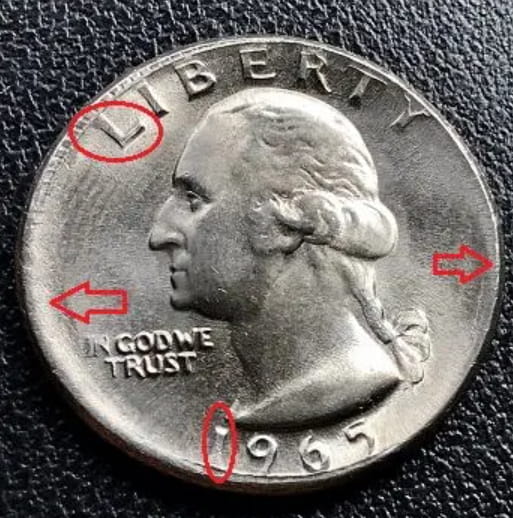
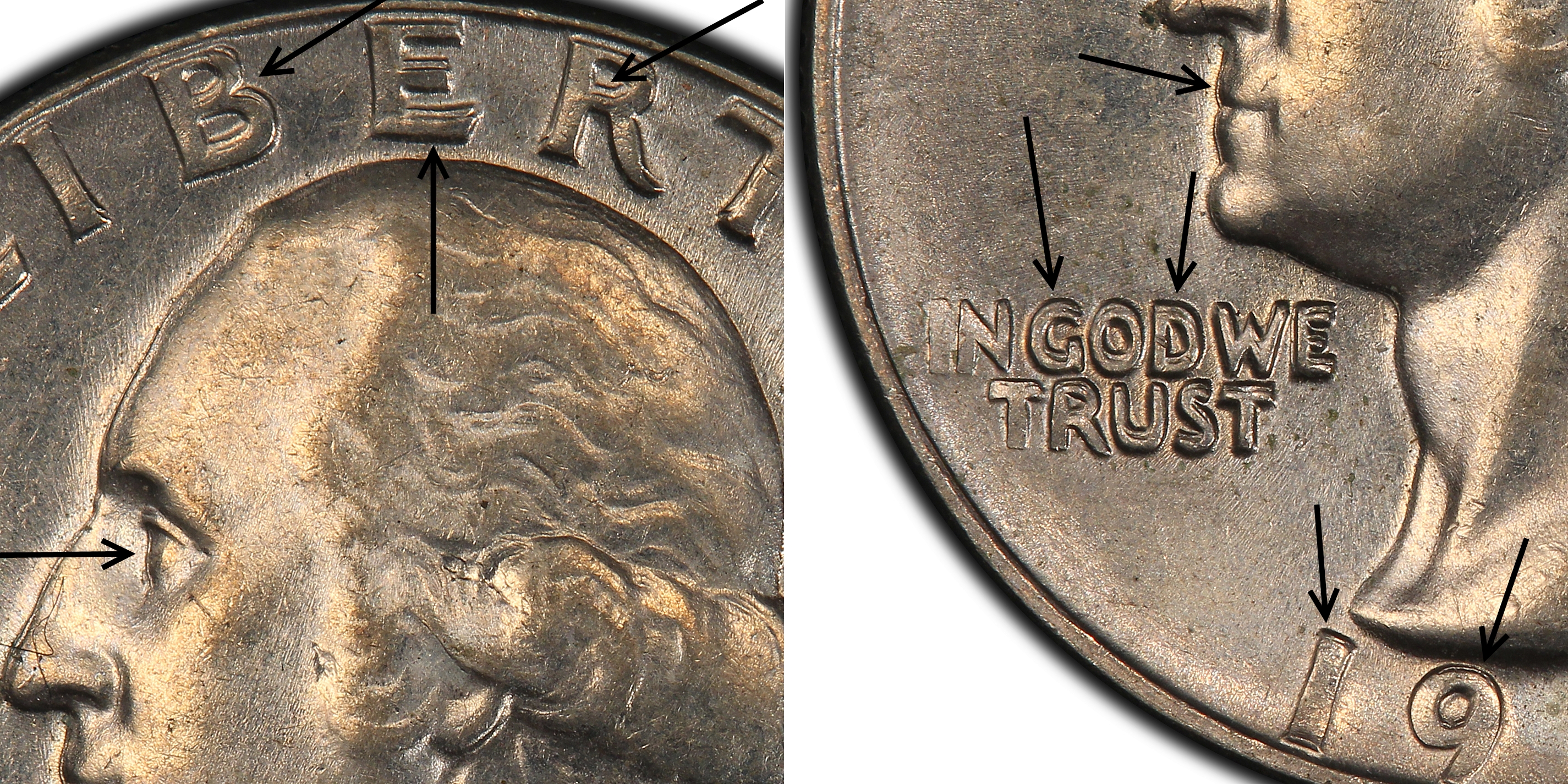
DDO errors show clear doubling on the front of the coin — most commonly on "LIBERTY," "IN GOD WE TRUST," the date, or Washington's portrait details. This occurs during die-making when the hub impresses the design more than once at slightly different angles. Use at least 10× magnification and look for distinct notching or separation — not the flat "shelf" of worthless mechanical doubling. Strong DDO varieties show doubling visible without magnification on Washington's nose and mouth, and across LIBERTY. Confirmed varieties sell for $360–$2,300 depending on strength and grade.
3. Doubled Die Reverse (DDR)
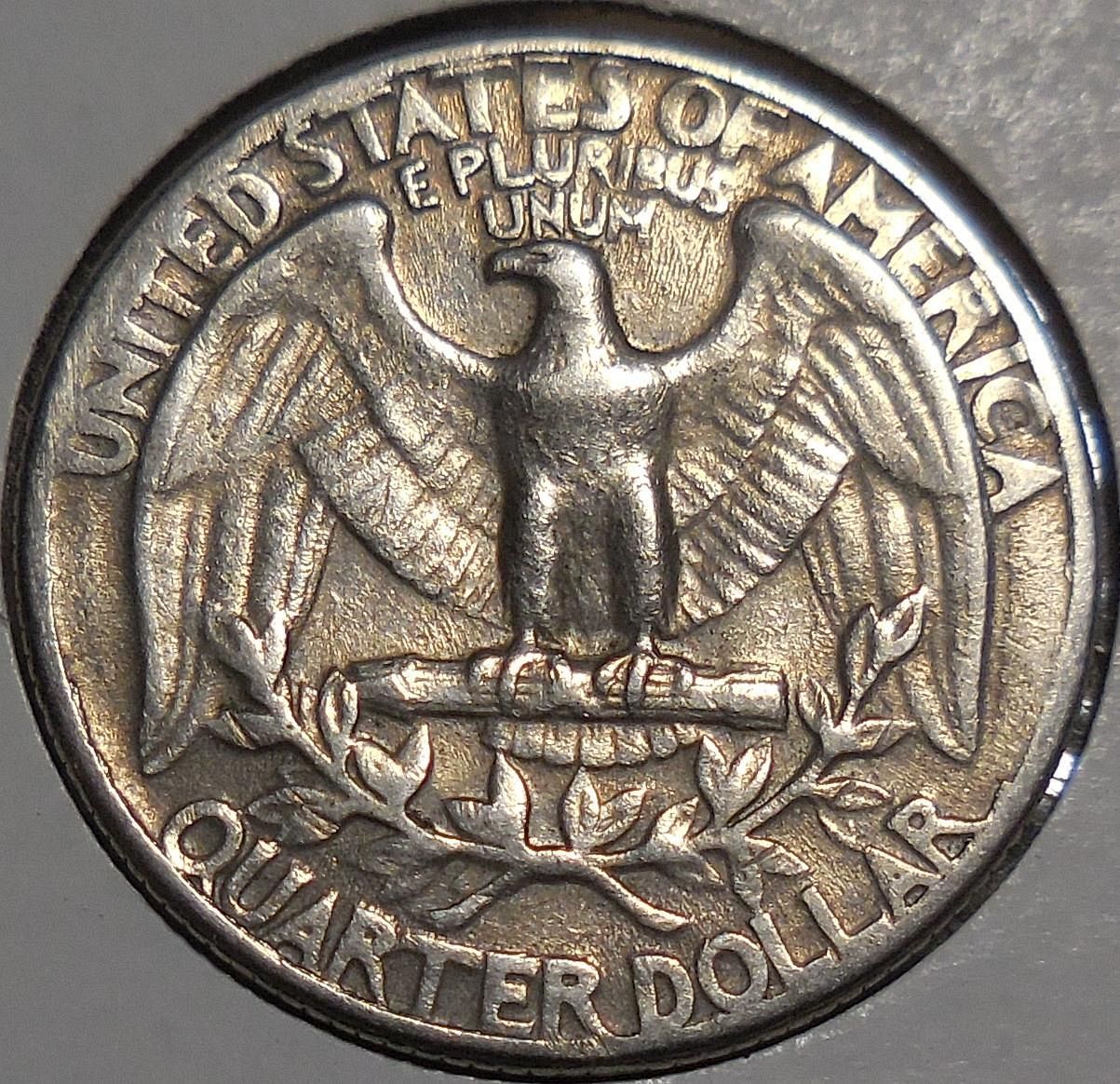
Doubled Die Reverse errors affect the back of the coin — most commonly on the eagle's feathers, "QUARTER DOLLAR," "UNITED STATES OF AMERICA," or "E PLURIBUS UNUM." Focus examination on the eagle's details and the rim lettering with 10× magnification. True DDR shows distinct notching on letters like "E," "R," "A," and "D" — consistent and uniform doubling that appears on every coin from the same die. The most valuable examples show dramatic doubling across multiple design elements visible at first glance.
4. Off-Center Strike Error
Off-center strikes occur when the planchet is misaligned with the dies during striking, creating a shifted design and a crescent-shaped blank on the opposite side. Two factors determine value: percentage off-center and whether the date "1965" remains visible. A 50% off-center with a visible date beats a 75% off-center with no date. Minor 5–10% strikes: $30–$80. Moderate 20–30%: $100–$300. Dramatic 40–50% with visible date: $300–$800+. Quarter off-center strikes are more valuable than penny off-centers due to the larger denomination.
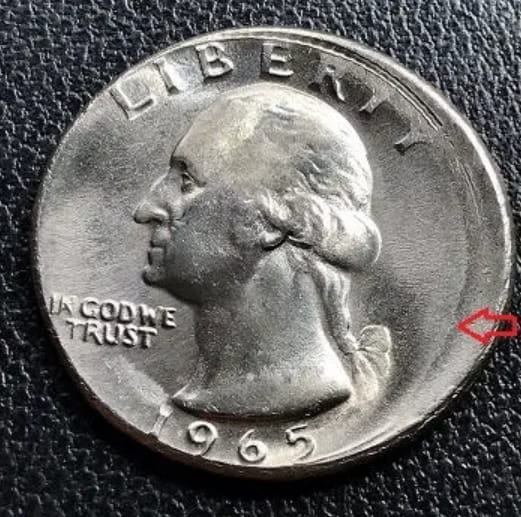
5. Die Crack Error
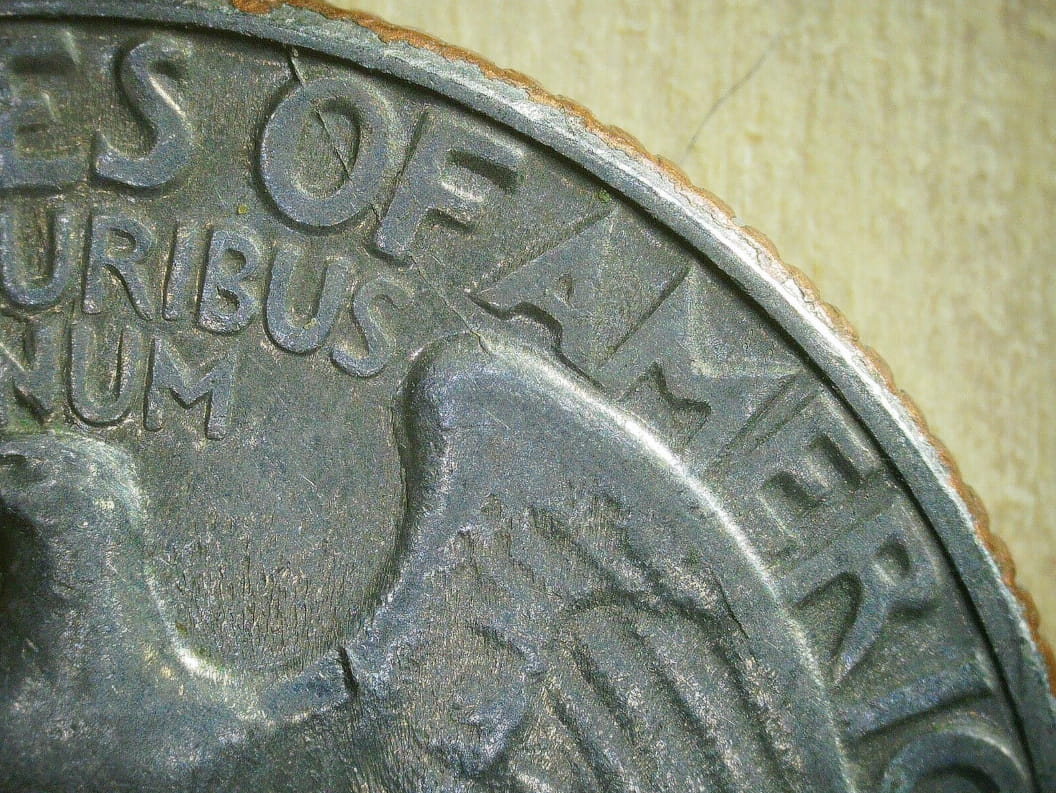
Die cracks appear as raised lines on the coin's surface — formed when cracks in the die fill with metal during striking. They range from minor hairline cracks worth a few dollars to major breaks bisecting Washington's portrait or the eagle, worth $50–$300. The most valuable die crack variants are retained cuds — where a chunk of the die broke away entirely, leaving a raised blank area near the rim. Distinguish cracks (raised) from scratches (incised). Large dramatic die breaks crossing the portrait or eagle are most desirable. Compare with coins from the same die to confirm authentic die variety.
6. Clipped Planchet Error
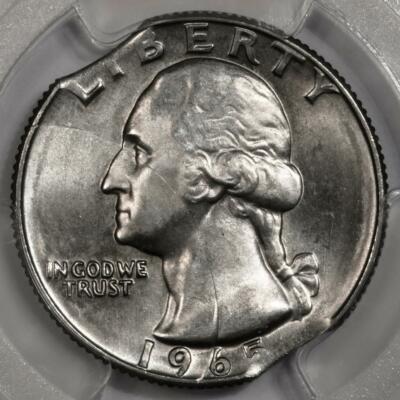
Clipped planchet errors occur when the coin blank is incompletely punched from the metal strip. Curved clips show an arc matching an adjacent blank; straight clips show where the planchet overlapped the strip's edge. Authentication key: the rim must be weak or completely absent in the clipped area — that separates genuine mint-made clips from post-strike damage. Larger clips (as a percentage of total coin circumference) command higher premiums. Elliptical clips — where a blank is punched from an already-clipped area — are particularly scarce. Clips of 10–20% bring $40–$100; larger examples reach $100–$200.
7. Strike Through Error
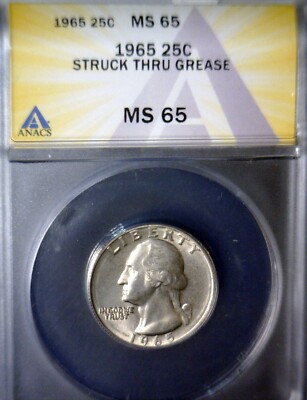
Strike through errors result from foreign material — grease, cloth fiber, wire, or metal shavings — trapped between die and planchet during striking. The material leaves an area where the design is weakened, missing, or shows the texture of the intruder. Grease fill-ins show mushy, indistinct detail. Cloth strike-throughs show fabric weave patterns. Wire strike-throughs leave linear impressions. The most collectible examples show clear evidence of what caused the error. Minor grease strikes: $15–$40. Major strike-throughs affecting Washington's portrait or the eagle with visible debris impressions: $100–$250.
8. Broadstrike Error
Broadstrike errors occur when the coin is struck outside the restraining collar that normally forms the rim and limits metal spread. The result is a quarter larger than the standard 24.3mm diameter — typically 25–27mm — with no raised rim and a flat, unserrated edge. The design appears slightly spread or elongated. Measure with calipers: a genuine broadstrike exceeds 24.3mm. The edge will be smooth and flat rather than showing the typical 119 reeds of a normal quarter. Partial collar broadstrikes have a weak rim on part of the coin and command higher premiums than full collar misses.
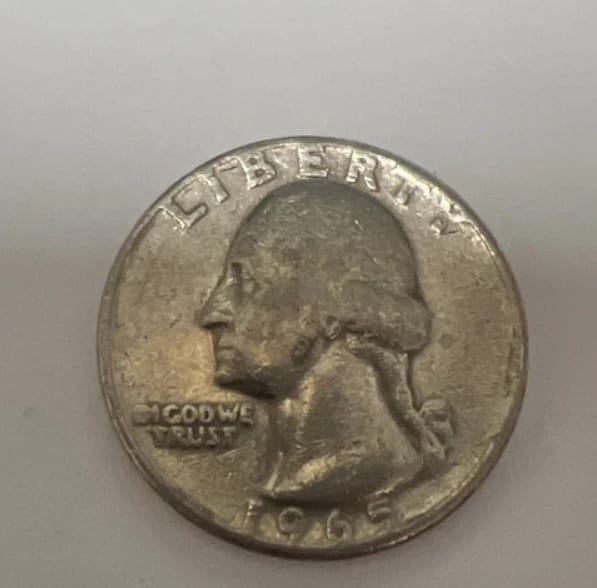
9. Wrong Planchet Error
Wrong planchet errors occur when quarter dies accidentally strike a blank intended for a different denomination. A quarter struck on a dime planchet measures ~17.91mm (vs. 24.3mm) and weighs ~2.27g (vs. 5.67g). Struck on a cent planchet: reddish color, design trimmed at edges, worth ~$1,000. Struck on a nickel planchet: larger but lighter than normal. A quarter struck on a dime planchet averages $4,500. Weight with a precision scale and calipers are the primary diagnostics. Due to high value and the existence of counterfeits, professional authentication by PCGS or NGC is mandatory before any sale.
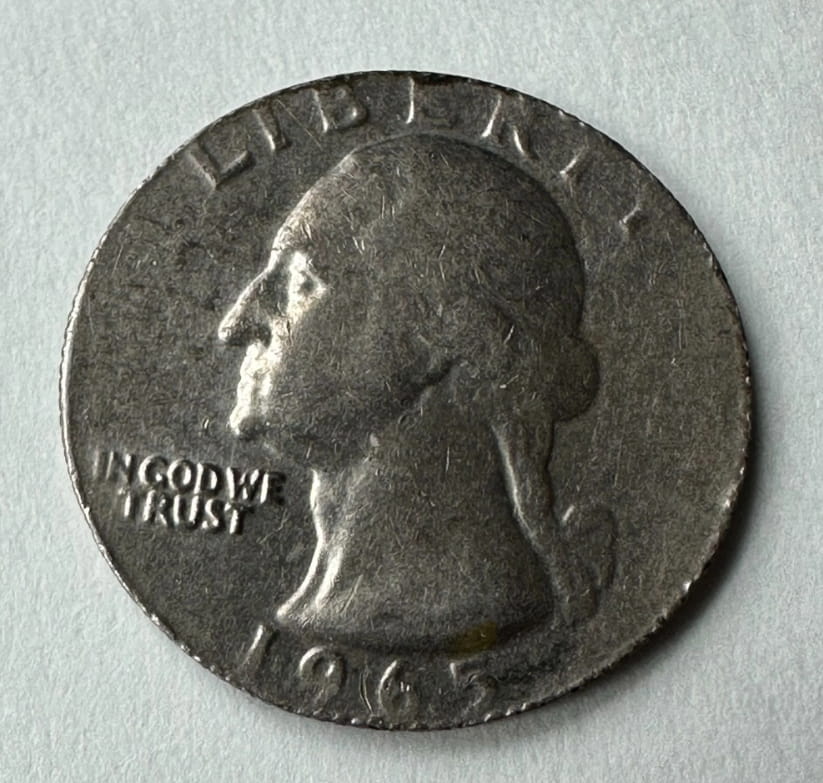
10. Missing Clad Layer Error
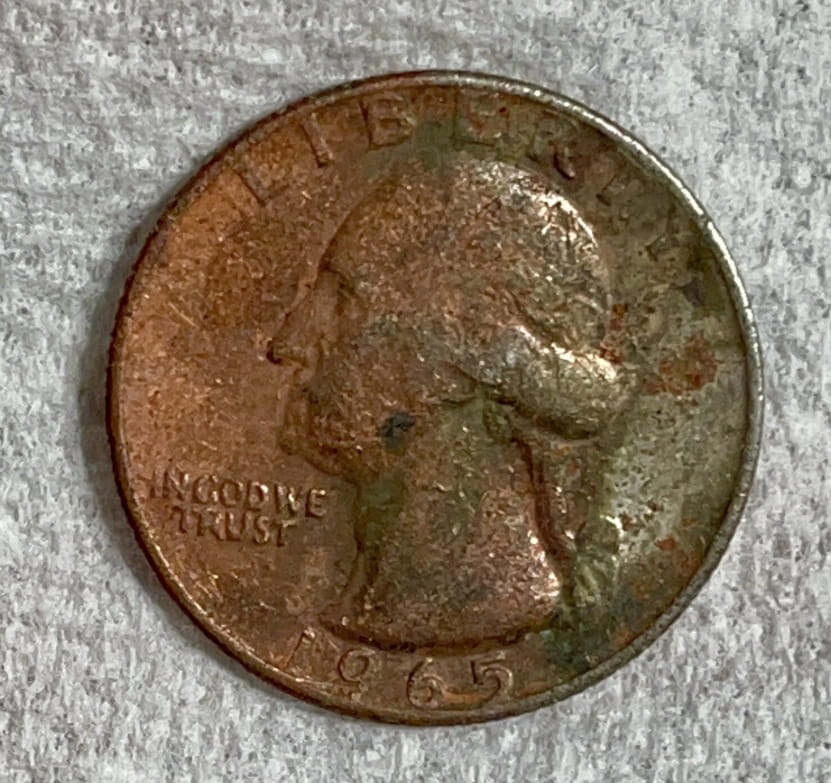
Unique to clad-era coins (post-1965), missing clad layer errors occur when one or both outer copper-nickel layers fail to bond to the copper core during planchet manufacturing. The affected side appears copper-colored while the opposite side looks normal. The coin weighs slightly less than 5.67g. A genuine missing clad error must show full design detail on the exposed copper surface — the error occurred before striking, so the design is intact. Do not confuse with environmental corrosion or artificially stripped plating. Coins missing both clad layers are extremely rare and more valuable. Examine the edge: the layer structure should be visible where the missing layer ends.
Real Money: Actual 1965 Quarter Auction Results
Not theory. Real coins. Real dollars.
Table 6: Verified 1965 Quarter Auction Results
| Coin Details | Venue / Year | Sale Price | Why It Sold High |
|---|---|---|---|
| Double-Tail Error | Heritage Auctions | $41,000–$80,000 | Rarest 1965 error — extra eagle tail on reverse |
| Silver Planchet AU58 | Heritage Auctions, 2014 | $14,687.50 | Transitional silver error — authenticated NGC |
| Silver Planchet XF45 | Heritage Auctions, 2022 | $9,300 | Silver transitional — authenticated PCGS |
| Silver Planchet AU53 | Heritage Auctions, 2021 | $7,800 | Transitional error, NGC certified |
| Silver Planchet MS66 | Heritage Auctions | $12,650 | High-grade silver error — exceptional preservation |
| Clad MS68 (type specimen) | Heritage Auctions, July 2023 | $11,400 | Registry-quality grade — virtually no equals |
| Wrong Planchet (dime blank) | Various | ~$4,500 | Undersized quarter design on dime planchet |
"I inherited a jar of old quarters and almost spent them all. One of them felt lighter — or maybe heavier? — I couldn't tell. Weighed them on a postal scale. One came out at 6.2 grams. Everything else was 5.67. Took it to a dealer. He said: 'Don't move. I'll call NGC right now.' Authenticated silver. Sold for $7,050."
— Collector forum post, widely shared, unverified but plausible
Check Your 1965 Quarters with CoinKnow Coin Identifier App
The fastest way to know what you're holding — before calling an expert
Identifying a 1965 quarter error used to require reference books, a coin dealer's trained eye, and hours of research. Today, CoinKnow lets you photograph your coin and get a preliminary identification in seconds — distinguishing SMS from circulation strikes, helping spot DDO doubling versus mechanical doubling, and flagging potential silver transitional errors before you invest in professional authentication fees.
Use the CoinKnow Coin Identifier app to instantly scan any Washington quarter — get variety identification, error detection, and current market values, all from your phone.
CoinKnow — Coin Identifier
iOS & Android · The #1 Coin ID App for Washington Quarter Collectors
Instant Recognition
Photograph your 1965 quarter and get immediate identification — circulation strike vs SMS, error type, and estimated value in seconds.
Silver Detection Guide
CoinKnow walks you through the edge test, weight check, and sound test to determine whether your 1965 quarter is the valuable silver transitional error.
Live Market Values
Real-time pricing based on recent auction results. Know what your 1965 quarter error is worth before approaching dealers or submitting for professional grading.
Download CoinKnow Free — Available on Both Platforms


📱 Pro Workflow: CoinKnow + Expert Grading
- Step 1: Check the edge first — copper stripe = clad. Solid silver = weigh immediately
- Step 2: Weigh it — 5.67g = normal. 6.25g = potentially silver transitional error worth $5,000+
- Step 3: Check finish — is it satin/mirror-like? Could be SMS. Compare to circulation strikes
- Step 4: Use CoinKnow to photograph, identify SMS vs business strike, and detect errors
- Step 5: Examine LIBERTY and the date with a 10× loupe for DDO doubling
- Step 6: For any coin potentially worth $150+, submit to PCGS or NGC for professional grading
The Bottom Line: Your 1965 Quarter Action Plan
Stop reading. Start checking.
Final Reality Check — 1965 Washington Quarter
| If Your 1965 Quarter Has… | It's Probably Worth… | Your Next Step |
|---|---|---|
| Copper stripe on edge, worn | $0.25–$1 | Spend it — very common |
| Copper stripe, uncirculated, full luster | $8–$32 | Store in a coin flip — some collector interest |
| Mirror/satin finish (SMS) | $84–$2,600+ | Have it graded — SMS DCAM commands real premium |
| Visible doubling on LIBERTY or date | $75–$2,300 | Do NOT spend — use CoinKnow to identify variety |
| No copper stripe on edge / weighs 6.25g | $5,000–$16,800 | STOP. Authenticate with PCGS or NGC immediately |
| Wrong weight / diameter / color | $200–$4,500+ | Wrong planchet — do not spend, authenticate now |
| Extra tail on eagle (reverse) 🔥 | $41,000–$80,000 | DO NOT SPEND. Call a major auction house today. |
Your 5-Minute 1965 Quarter Checklist:
- Check the edge — copper stripe = normal clad. Solid silver = call an expert before anything else
- Confirm no mint mark — all 1965 quarters lack mint marks by design; this is not an error
- Weigh it — 5.67g = clad. 6.25g = silver transitional error. Use a jeweler's scale
- Check the finish — mirror-like or satin sheen? Possibly SMS — have it graded
- Examine LIBERTY with a 10× loupe — look for notching or doubling = DDO error
- Check the reverse eagle carefully — any extra tail feature visible? If yes: stop everything
- Use CoinKnow — instant identification, error detection, and live market values
The 1965 Quarter: A History-Making Coin with History-Making Errors
The 1965 Washington quarter changed American numismatics forever. For the first time in more than 170 years, U.S. quarters were made without silver — a consequence of rising metal prices, rampant hoarding, and a coin shortage that threatened everyday commerce. The Mint responded by striking over 1.8 billion new clad quarters at a single facility, all without mint marks, all in record time.
In that rush, mistakes happened. Silver planchets left over from 1964 slipped into the production line. Dies struck coins outside their collars. Planchets from dimes and cents found their way to the quarter press. And somewhere in that enormous output, a tiny number of extraordinarily valuable errors were sealed into the stream of ordinary commerce — where they waited decades to be found.
"The 1965 quarter is simultaneously the most common silver-era coin and the most historically charged. It ended silver coinage as Americans had known it for generations. And in doing so, it accidentally created some of the most valuable error coins of the modern era."
Your 1965 quarter in pocket change is almost certainly worth exactly 25 cents. But the edge test is free, takes three seconds, and has turned 25-cent pieces into $14,000 coins. Check the edge. Weigh it. Look at the eagle. It costs nothing to know.
Found a 1965 Quarter Worth Investigating?
Use CoinKnow for an instant ID, then get professional eyes on anything with a solid silver edge, unusual weight, or visible doubling.
Last updated: 2026 | Values based on PCGS CoinFacts, NGC Coin Explorer, Heritage Auctions, and eBay sold listings
Disclaimer: Coin values are estimates based on recent market data. Actual prices depend on individual coin condition, current demand, and auction timing. Professional grading recommended for coins potentially worth $150+.